Pin77 Deposit – Secure, Flexible And Efficient Payments
Pin77 Deposit provides a structured payment process covering account funding, withdrawal eligibility, transaction verification, and payout settlement. At Link Pin77, members can manage PHP transactions through supported banking and electronic payment channels while following defined account requirements. Withdrawal processing depends on available balances, payment details, and completed verification procedures. Clear transaction records and standardized payment instructions help members handle deposits and withdrawals without unnecessary interruptions.
Withdrawal requirements for Pin77 Deposit
Pin77 Deposit connects account funding with withdrawal eligibility through a defined transaction procedure. Before requesting a payout, members must hold a sufficient withdrawable balance, complete the required identity checks, and provide valid receiving account details. Pin77 processes withdrawal requests according to the payment channel selected and the applicable transaction conditions. Any unsettled wagers or restricted promotional balances remain separate from funds available for immediate withdrawal.
For Pin77 Deposit, payment limits and processing periods should be displayed clearly before a transaction receives final confirmation. The following figures illustrate a consistent PHP transaction schedule for the payment workflow described here. They are example operating parameters rather than published cashier limits. Actual withdrawal eligibility is determined by the limits presented during the transaction, including the minimum payout, maximum transfer amount, and available payment balance.
| Payment method | Minimum withdrawal | Maximum per request | Example processing time |
| GCash | ₱300 | ₱30,000 | 5–30 minutes |
| Maya | ₱300 | ₱30,000 | 5–30 minutes |
| BDO bank transfer | ₱500 | ₱100,000 | 1–24 hours |
| BPI bank transfer | ₱500 | ₱100,000 | 1–24 hours |
| USDT (TRC20) | 10 USDT | 2,000 USDT | 5–60 minutes |
Detailed Pin77 Deposit withdrawal procedures
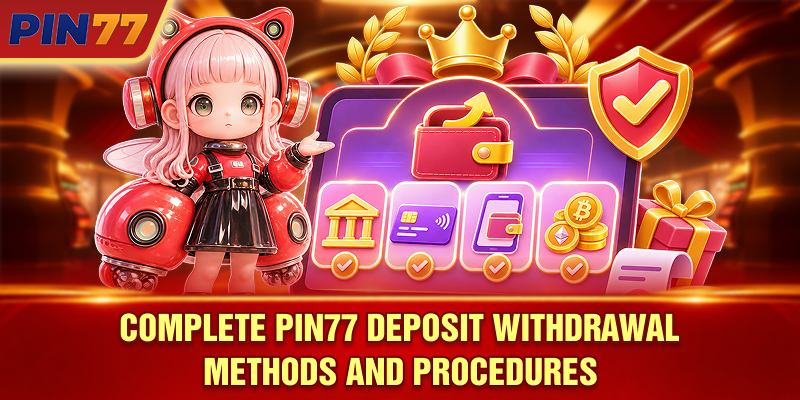
Pin77 Deposit organizes withdrawal requests around three payment routes: electronic wallets, Philippine bank transfers, and cryptocurrency transactions. Pin77 members select their preferred channel, enter the requested amount, and complete the corresponding payment instructions. Each route follows its own recipient information requirements, confirmation sequence, and settlement mechanism. The following procedures explain how payment details move from the cashier interface to final transaction processing.
Withdraw funds through GCash and Maya wallets
Pin77 Deposit supports a wallet-based withdrawal workflow in which the recipient’s registered mobile number identifies the receiving account. GCash and Maya transfers require accurate recipient information and sufficient available funds before processing. Wallet payouts are submitted through the cashier interface, where members review the requested PHP amount and confirm the receiving details. The payment status changes as the transfer progresses through verification, approval, and settlement.
The withdrawal sequence follows these steps:
- Step 1: Open the cashier and select Withdrawal.
- Step 2: Choose GCash or Maya as the receiving channel.
- Step 3: Enter the wallet number and withdrawal amount.
- Step 4: Review the recipient details and confirm the request.
- Step 5: Check the transaction status until settlement is recorded.
Complete withdrawals using Philippine bank accounts
Pin77 Deposit provides a bank-transfer procedure for members using supported Philippine financial institutions. A withdrawal instruction contains the receiving bank, account holder’s name, account number, and requested PHP amount. Bank transfers may involve additional processing stages because the receiving institution must accept and credit the payment. Members should use an account registered under their verified identity, allowing the transaction information to remain consistent throughout settlement.
Bank withdrawals are completed through the following sequence:
- Step 1: Navigate to Withdrawal and select Bank Transfer.
- Step 2: Choose BDO, BPI, UnionBank, or another listed institution.
- Step 3: Enter the account name, number, and PHP amount.
- Step 4: Verify the bank details before submitting.
- Step 5: Monitor the transfer until the bank credits the funds.
Process USDT withdrawals through crypto wallets
Pin77 Deposit includes a cryptocurrency withdrawal procedure based on wallet addresses and blockchain network selection. USDT transfers require the sending and receiving networks to match, particularly when selecting TRC20 or another supported network. Blockchain payments are processed through network confirmations rather than conventional banking settlement. Incorrect wallet addresses or incompatible networks can result in irreversible losses, making recipient verification an essential part of the transaction.
The cryptocurrency withdrawal process includes these steps:
- Step 1: Select USDT in the Withdrawal section.
- Step 2: Choose the blockchain network displayed by the cashier.
- Step 3: Paste the destination wallet address.
- Step 4: Enter the transfer amount and review network fees.
- Step 5: Confirm the request and check its transaction hash.
Common Pin77 Deposit errors and solutions
Pin77 Deposit transactions can encounter interruptions when recipient information, account verification, or payment processing records do not satisfy the required conditions. Pin77 members can identify these issues through transaction status messages and cashier notifications. Most correctable payment errors involve mismatched account details or requests that remain pending during verification. Understanding the distinction between rejected and processing transactions helps members select the appropriate resolution.
Pin77 Deposit – Resolve rejected withdrawals and account mismatches
Pin77 Deposit withdrawal rejections commonly involve incorrect bank numbers, mismatched wallet identities, or amounts exceeding the available withdrawal balance. A rejected transaction does not represent a completed transfer, and the amount should be reconciled against the account balance before another request is submitted. Members must correct the specific field identified in the rejection notice rather than repeatedly sending identical instructions.
The correction procedure is straightforward:
- Check recipient information: Match the bank account or wallet identity with verified records.
- Review the amount: Confirm the requested sum is within the displayed transaction limits.
- Complete verification: Submit any required identity documentation.
- Resubmit the request: Enter corrected payment details after the rejection is recorded.
Address pending transfers and delayed settlements
Pin77 Deposit pending transactions indicate that a payment request has entered processing but has not reached final settlement. Delays may occur during recipient verification, bank processing windows, or blockchain confirmation periods. Members should distinguish an active pending request from a failed transfer before initiating another withdrawal. Submitting duplicate instructions can create separate transactions and complicate payment reconciliation.
The resolution process follows four checks:
- Review transaction status: Identify whether the request is pending, approved, or rejected.
- Confirm payment details: Check the selected recipient and transfer network.
- Inspect transaction references: Locate the payment ID or blockchain hash.
- Contact payment support: Provide the reference number and requested amount when processing exceeds the displayed timeframe.
Conclusion
Pin77 Deposit establishes a clear relationship between available account funds, withdrawal authorization, and final payment settlement. Pin77 members can complete transactions through supported wallets, banks, and cryptocurrency channels by following the appropriate recipient verification procedures. Accurate payment information, transparent transaction limits, and clear processing statuses remain central to a consistent cashier experience. These operational elements provide the structure needed for handling payment requests and resolving transaction interruptions efficiently.